You can expand your impact without expanding your exhaustion
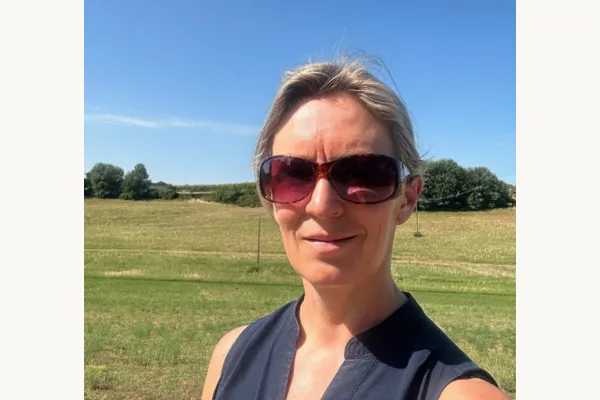
I walk the same loop most mornings near my home in Piemonte, through the vineyards and past the dairy farm. The grapes were ready a full month early this year, another small sign of how unusual the weather has been. It's on that walk that I do my clearest thinking, and it's where I keep coming back to something I see constantly in the leaders I work with, and something I lived through myself.
I spent years studying leadership properly. Strategy, skills, the theory of it, alongside a lot of reflection on my own practice. That work mattered. I'm certain it shaped my career. What I understand now is that it was only ever one part of what actually matters.
When I got my first Principal position, I'd got there by working incredibly hard. Hard work had carried me through every role and every qualification before that, so in my head, success and hard work had become the same thing.
Hard work matters. Of course it does. What happened for me was that hard work became the only proof of my worth. That looked like never quite switching off. Twelve hour days. No proper time off unless we were away on holiday, and even then my mind stayed on work. If I took time off, I felt guilty about it. I was earning what I considered to be a big salary, and somewhere in my head that meant I had to keep proving I deserved it. If I stopped working that hard, I was convinced someone would find me out, that I wasn't really up to the job, that I didn't belong there.
The patterns I see everywhere now
I see the same pattern constantly in the leaders I work with.
Some are classic overachievers. They've become so used to operating at a pace that switching off starts to feel almost impossible. Over time, that low level of constant strain takes a real toll, on the body as much as the mind.
Others carry a self-doubt so loud they won't admit, even to themselves, that they want more. More impact, a bigger role, more of a say. There's a voice telling them they don't belong, that they're not good enough, that wanting it is somehow overstepping. Some make it anyway, despite that voice, but it travels with them into every room, limiting how fully they can lead without them ever quite naming it.
Then there are the ones who give everything to everyone else. Always first to take on the next task, always looking after the team, and somewhere along the way, they've stopped looking after themselves.
If you're leading, you're not going to make everyone happy. Some of your decisions won't be popular, because the right call for the organisation and the popular call aren't always the same thing.
Strategy, identity, vitality
What I've come to believe is that leading well over the long term asks three things of us.
The strategy and the skills to do the job. The identity to occupy that role fully, without constantly needing to prove yourself in it. The vitality to actually sustain it.
The identity part is the one most leadership training skips past. It means noticing the patterns you've carried with you for years, some of which helped you become successful, but don't necessarily serve the leader you're becoming. The overworking. The overgiving. The constant need to prove yourself. The self-doubt that makes you question decisions you are perfectly capable of making.
Then there's vitality, the part people skip past fastest of all. So many leaders put themselves last. They don't sleep properly, they don't eat well, they stop moving their bodies, and eventually there's simply nothing left to lead or live well with. You can run on empty for a while. Not forever. Eventually something usually has to give, whether that's your health or the role itself.
This is where my work sits. You can expand your leadership and your impact, on your organisation, your clients or students, your team, while also growing into the identity that role needs, without carrying the same old patterns around with you, and while looking after your health, your relationships and your own life.
We only get the one life. It matters that we make an impact, but that impact needs room in it for joy, for fun, for relationships that actually mean something.
A few questions worth asking yourself
Which of these patterns do you recognise in yourself: the overworking, the self-doubt, the overgiving?
What would it look like to expand your impact this year without expanding your exhaustion alongside it?
Where in your leadership are you still measuring your worth by how hard you're working, rather than by the impact you're actually having?
Take the break anyway
Notice the moment you catch yourself feeling you haven't done enough to deserve a break, and take the break anyway. Ten minutes. A walk without your phone. Rest isn't something you need to qualify for.
Where this work continues
This is exactly what I explore in the free Expansive Leadership Masterclass, the patterns that limit leadership even in highly capable people, and what it actually takes to expand your impact without expanding your exhaustion alongside it. That doesn't have to mean climbing further up a ladder. It might mean having more impact in the role you're already in, or finding a better balance in the life you already have.
About the author
Johanna Urquhart is a leadership coach, mentor and the founder of Resta Forte. With 25 years of senior leadership experience including 12 years as a school Principal and CEO she supports leaders to step fully into their leadership, expand their influence and make a meaningful impact, while continuing to nurture their health, relationships and sense of self.